Learn · GLP-1
The GLP-1 Face
What changes, where it shows, and a calm way to watch your own.
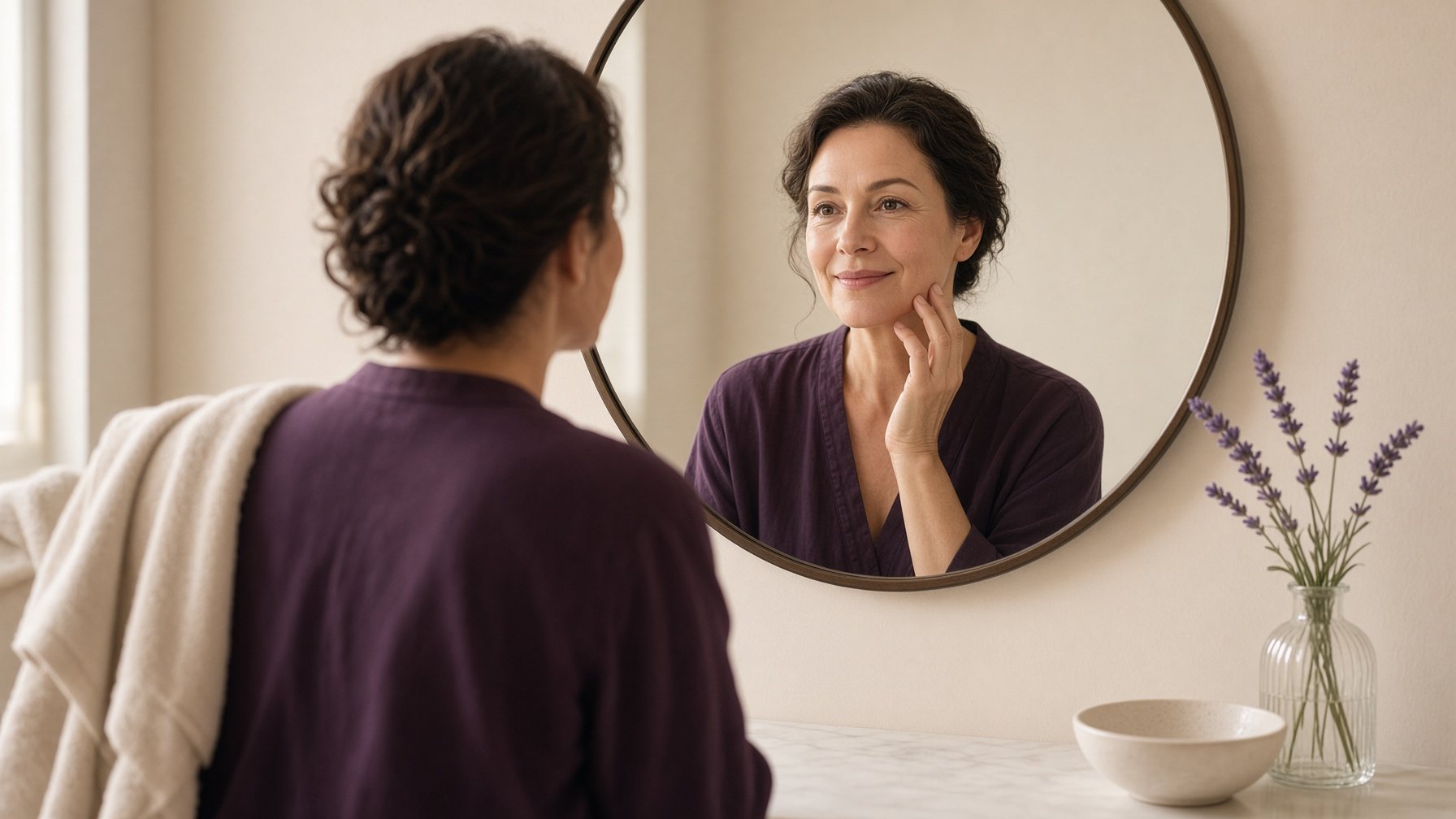
If you are on a GLP-1 or another weight-loss journey, you have probably noticed it before anyone told you. The face changes. Cheeks look less full. The jawline shows up. The neck looks longer in photos. For a lot of people, the mirror moves before the rest of the story feels real.
The internet gave this a name, "Ozempic face," and mostly used it to scare people. We think that is the wrong frame. A changing face on a weight journey is normal, it is often something people are proud of, and it is worth understanding calmly.
What is actually changing
Your face has fat in layers. There is a superficial layer just under the skin, and deeper pads that sit closer to the bone. When the body loses weight, the face loses some of that fat too, and the early research suggests most of the change happens in the outer layer.
One of the first studies to measure this directly came out of Vanderbilt and was published in Otolaryngology, Head and Neck Surgery. Researchers looked at imaging from 20 people on GLP-1 medications who lost an average of about 11 kilograms. Midface volume dropped by a median of about 9 percent, and the change tracked with weight lost, roughly 7 percent of midface volume for every 10 kilograms. The loss was concentrated in the superficial fat, not the deep pads.
Twenty people is a small study. It is a first look, not the final word. But it lines up with what people see in the mirror: the change is real, it follows the scale, and it shows up where the soft tissue is.
Where it tends to show
- The cheeks. Usually the first place people notice. Fullness softens.
- The jawline. The line from ear to chin gets sharper.
- Under the chin. Often one of the most visible changes in a side-on photo.
- Around the eyes. Puffiness can ease. For some people the area looks more hollow.
- The neck. Contour changes that people notice in shirts and collars first.
Speed matters
Dermatologists who work with GLP-1 patients tend to say the same thing: the faster the loss, the more noticeable the face change, because skin takes time to adjust to less volume underneath. That is not a reason to worry. It is a reason to watch your own change over weeks, instead of judging yourself on any single day.
How to watch it calmly
The honest way to see a face change is the same way you would see any change: measure it the same way, on the same person, over time. One photo a week, same light, same distance, same neutral face. Line them up. Look at the trend, not the day.
That is exactly what VisageAir™ is built to do. It lines up your own weekly selfies and reads soft-tissue change through the cheeks, jaw, chin, eyes, and neck, measured against you. No stranger's average. No paint on your face. No verdict. See how it works, or start with how to take a selfie that means something.
A note on your medication
This article is about watching your own face on a wellness journey. It is not about whether a medication is working, which dose is right, or what to do about any side effect. Those are conversations for your prescriber, and they should be.
Frequently asked questions
What is Ozempic face?
Ozempic face is a popular term for the loss of facial fullness that can come with weight loss on a GLP-1 medication such as semaglutide. It is mostly a change in the soft tissue of the face as the body loses fat, not a separate condition.
How much does the face change on a GLP-1?
An early imaging study from Vanderbilt, published in Otolaryngology, Head and Neck Surgery, found a median midface volume decrease of about 9 percent in 20 people who lost an average of about 11 kilograms, with roughly 7 percent of midface volume lost per 10 kilograms. It is a small first study, not a final answer.
Where on the face does GLP-1 weight loss show first?
People most often notice it in the cheeks, the jawline, under the chin, around the eyes, and in the contour of the neck, where soft tissue sits closest to the surface.
Does faster weight loss change the face more?
Dermatologists who treat GLP-1 patients generally report that faster loss makes facial change more noticeable, because skin needs time to adjust to less volume underneath.
How can I track facial changes on a weight-loss journey?
Take one frontal photo a week in the same light, at the same distance, with a neutral face, and compare the series over weeks rather than day to day. VisageAir is built to do this automatically, measured against your own baseline.
- Radiographic Midfacial Volume Changes in Patients on GLP-1 Agonists. Otolaryngology, Head and Neck Surgery. Wiley Online Library.
- What is "Ozempic Face"? Medical News Today.
This article is general wellness and lifestyle education, not medical advice. VisageAir is not a medical device. For questions about a medication, your weight, your sleep, or any health condition, talk with your clinician or prescriber.
VisageAir provides general wellness and longevity information only. It is not a medical device, and it is not intended to diagnose, treat, cure, or prevent any disease.