Learn · Women
Women, Muscle, and the GLP-1 Era
Women are the majority on GLP-1s. Women are not small men. Train and eat like it.
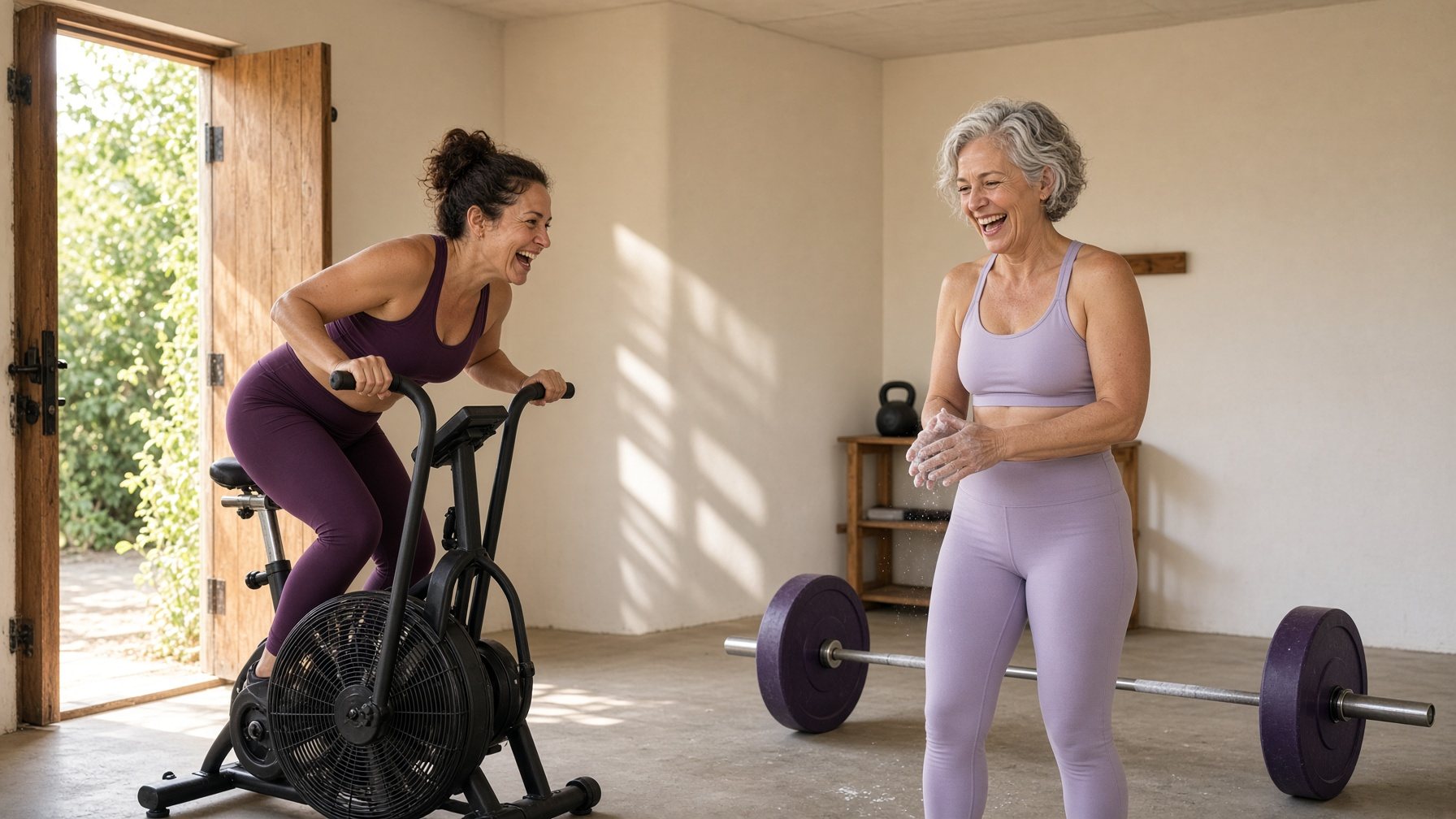
Look at who is actually on a GLP-1 today and one thing stands out: it is mostly women. In KFF polling, women were more likely than men to say they are currently taking a GLP-1, 15 percent versus 9 percent. Many of them are in their 40s and 50s, right in or near the menopause transition.
That matters, because the menopause transition already changes muscle, fat, and metabolism, and GLP-1 weight loss can take some muscle with it. Two of the clearest voices on what to do about it are Dr. Stacy Sims, the exercise physiologist behind the idea that "women are not small men," and Dr. Rhonda Patrick of FoundMyFitness. Here is what their work points to, in plain language.
Why women need their own playbook
Much of the classic exercise and nutrition research was done on men. Sims has spent her career pointing out that women's physiology, and especially the hormonal shifts of perimenopause and menopause, changes how they respond to training and food.
One study she highlights, published in the journal Menopause, compared 72 active women before, during, and after the transition. The perimenopausal women carried more fat and less lean mass than the premenopausal women, and more of it around the middle. Most of the women in the study lifted weights only about once a week. The researchers' conclusion was the same as Sims's: resistance training and high-intensity work are the tools to push back.
Sims also explains the why. Estrogen supports the muscle's ability to repair and rebuild. As it fluctuates and falls, muscle needs a stronger signal to hold on. That is where lifting heavy comes in.
Lift heavy. Really.
Sims's advice to women in the transition is famously blunt: if you do nothing else, lift heavy. Not endless light reps. Heavy enough that the last couple of reps in a set are genuinely hard. She suggests lifting about three days a week, built around big compound movements like squats, deadlifts, presses, and rows.
If the idea of heavy weights feels intimidating, that is normal, and it is also the point. Start with a coach, learn the movements, and build up over weeks. Exercise physiologist Dr. Andy Galpin's 3-to-5 approach is a simple way to structure it: 3 to 5 days, 3 to 5 exercises, 3 to 5 heavy reps, 3 to 5 sets, 3 to 5 minutes of rest, every rep lifted with full intent. Galpin makes the same case Sims does from a different angle: strength and power fade faster than muscle size with age, so heavy, intentional training matters most. The full plan is in Keep the Muscle.
Sprint, briefly
The second piece of Sims's approach is sprint interval training: very short, all-out efforts of about 10 to 30 seconds, with full recovery between. On a bike, a rower, a hill, or a track. It is short on time and long on effect, and Sims recommends it for women in the menopause transition to support metabolism and body composition. Many of her clients pair heavy lifting and sprints on the same day, then take real recovery days between.
Eat more protein than you think
This is where Sims and Patrick land in the same place. The official recommended daily allowance for protein, 0.8 grams per kilogram of body weight, is a floor, not a target. Patrick has made the case in detail, including in a long 2025 conversation with Dr. Peter Attia, that newer research methods show most adults need meaningfully more to hold on to muscle, and that needs go up with age, with training, and when you are trying to lose fat while keeping muscle. She discussed GLP-1 medications directly in that episode, because appetite drops and protein is often the first thing to go.
Sims's target for active women is at least 1.8 to 2 grams per kilogram a day, which she translates to roughly 30 grams of protein at each meal and 15 to 20 grams with snacks. On a GLP-1, with a smaller appetite, that takes planning. Protein first at every meal is a simple rule that helps.
Your right number depends on your size, your health, and your kidneys, among other things. Treat these as the experts' starting points and settle yours with your clinician or a registered dietitian.
The creatine conversation
Patrick has also been one of the most prominent voices on creatine, one of the most studied supplements there is. She points to a growing body of evidence that creatine helps preserve muscle with age, supports bone, may help cognition under stress, and speeds recovery from hard training, which is why it comes up so often in conversations about women and aging. It is still a supplement. Ask your clinician whether it fits you before you start.
Sleep, stress, and the night
The menopause transition often brings rougher nights, and muscle is rebuilt during recovery. Hard training on short, broken sleep is a poor trade. Pay attention to your nights as closely as your lifts. See What the Night Knows.
Watch your own change
Put it together and the picture is clear. Lift heavy, sprint briefly, eat the protein, protect your sleep, and watch the trend, not the day. Your face is one of the most visible places a GLP-1 journey and the menopause transition show up. VisageAir™ gives you a calm, you-versus-you view of it over weeks, next to your nights. No stranger's average. No verdict. Just your own line, getting stronger.
Check first
If you are new to lifting or sprinting, managing a health condition, or taking any medication, talk with your clinician before starting a heavy or high-intensity program.
Frequently asked questions
Are more women than men on GLP-1 medications?
Yes. In KFF polling, 15 percent of women said they were currently taking a GLP-1 drug, compared with 9 percent of men.
Should women in perimenopause lift heavy weights?
Dr. Stacy Sims argues yes: heavy resistance training about three days a week provides the strong stimulus muscle needs as estrogen fluctuates and declines. Start with a coach and build up over weeks.
What is sprint interval training for women?
Very short, all-out efforts of about 10 to 30 seconds with full recovery between them, on a bike, rower, hill, or track. Sims recommends it during the menopause transition to support metabolism and body composition.
How much protein should women on a GLP-1 eat?
Sims suggests at least 1.8 to 2 grams per kilogram per day for active women, roughly 30 grams per meal. Because appetite drops on a GLP-1, putting protein first at each meal helps. Confirm your number with a clinician or dietitian.
Is creatine good for women?
Creatine is one of the most studied supplements. Rhonda Patrick highlights evidence that it helps preserve muscle with age, supports bone, may help cognition under stress, and aids recovery. Ask your clinician whether it fits you.
- Poll: 1 in 8 adults say they are currently taking a GLP-1 drug. KFF.
- Dr. Stacy Sims, Harness the Perimenopause "Power Window." drstacysims.com.
- Body composition and metabolism across the menopause transition. Menopause, 2022. PubMed.
- #369: Rethinking protein needs for performance, muscle preservation, and longevity, and the benefits of creatine and sauna, with Rhonda Patrick, Ph.D. The Peter Attia Drive, October 2025.
- Dr. Andy Galpin: Optimal Protocols to Build Strength and Grow Muscles. Huberman Lab.
- Dr. Rhonda Patrick on creatine. FoundMyFitness.
This article is general wellness and lifestyle education, not medical advice. VisageAir is not a medical device. For questions about a medication, your weight, your sleep, or any health condition, talk with your clinician or prescriber.
VisageAir provides general wellness and longevity information only. It is not a medical device, and it is not intended to diagnose, treat, cure, or prevent any disease.