Learn · Tips
The Selfie That Means Something
Five habits that turn a weekly selfie into a real series.
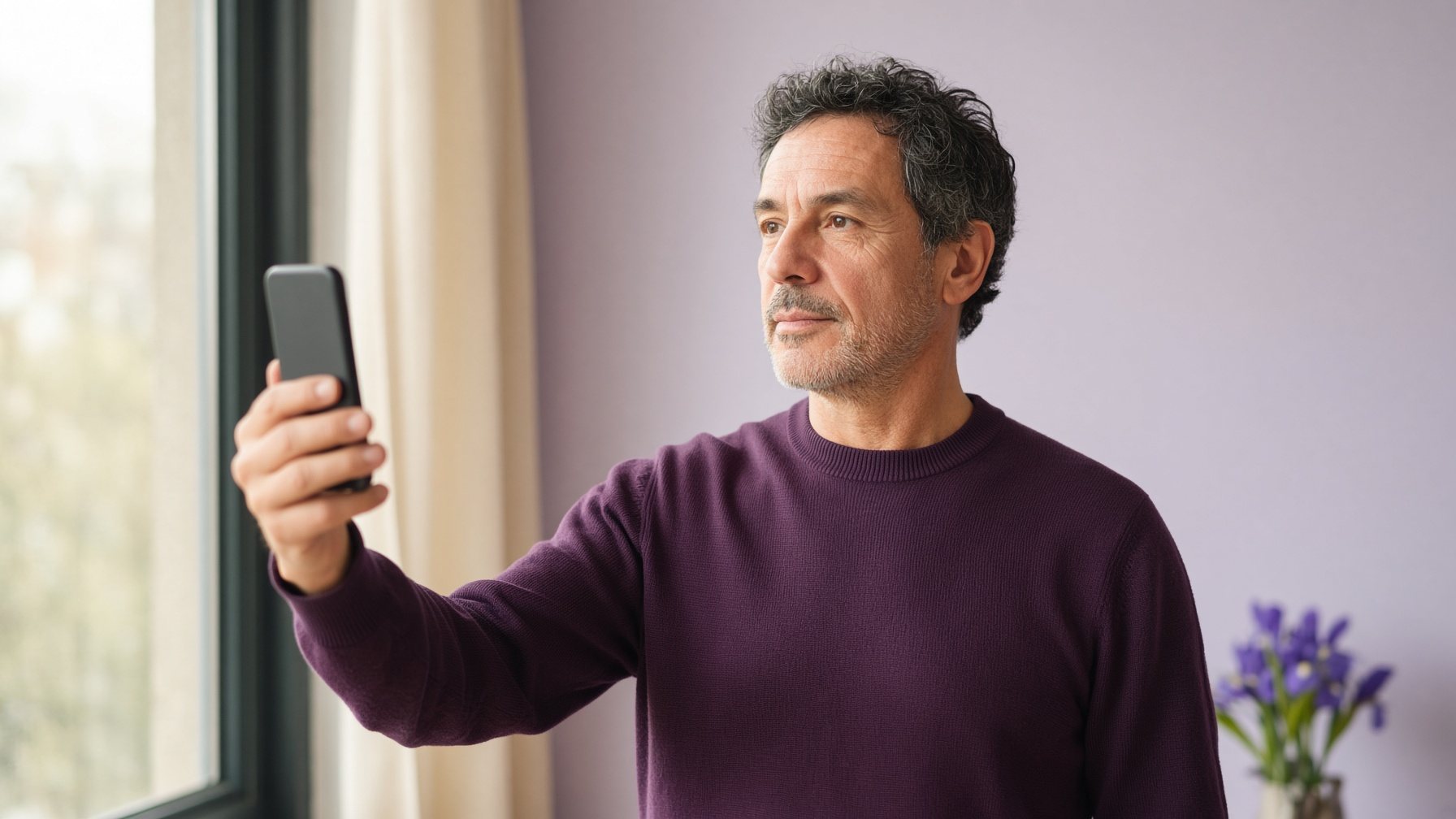
You already take selfies. The good news is that a progress selfie uses the same muscle memory. The catch is that most progress photos are quietly ruined by things that have nothing to do with your face: a new lamp, a closer arm, a slight tilt, a smile. Fix those, and a weekly selfie becomes a real series.
1. Same light, every time
Light changes a face more than a month of progress can. Soft, even light from in front is best. A window you face, not one behind you. Avoid overhead bulbs, which carve shadows under the cheeks and chin that look like change and are not. Pick one spot in your home and use it every week.
2. Same distance
Hold the phone at arm's length, straight out, at eye level. Closer makes the nose and cheeks look bigger. Farther makes the face look narrower. Arm's length is repeatable because your arm does not change.
3. Level, straight on
Chin level, eyes straight into the lens, head not turned or tipped. A few degrees of tilt changes how the jaw and neck read. If your phone shows a grid, line your eyes up with the same line each time.
4. Neutral face
No smile, no pout, jaw relaxed, lips gently closed. A smile lifts the cheeks and changes the whole lower face. Save the smile for the photo you post.
5. Same day, same time
Once a week is plenty. Same day, same time of day, ideally morning before a salty dinner or a long day adds puffiness. Consistency beats frequency.
The quiet ruiners
- Filters and beauty modes. Turn them off. Many phones smooth skin and reshape faces by default.
- Portrait mode. The blur edge can shave the jaw and neck line.
- Glasses one week, none the next. Pick one.
- Hair across the face. Pull it back so the cheeks and jaw are visible.
- Judging week to week. Look at the series every few weeks, not every photo.
Or let the frame do it
This is the part VisageAir™ is built to take off your hands. The guided frame reads your distance, angle, light, and expression live, and it will not fire until they match your last capture. Then it takes a short burst and keeps the sharpest frame. About ten seconds, once a week. See how it works.
Frequently asked questions
How do I take a good progress photo of my face?
Face a window for soft, even light, hold the phone at arm's length at eye level, keep your head level and your face neutral, and take the photo on the same day and time each week with filters turned off.
Why do my progress photos look inconsistent?
Usually because of changes in light, distance, angle, expression, or phone filters rather than your face. Fixing those five things makes a series comparable.
How often should I take progress selfies?
Once a week is enough. Compare the series every few weeks instead of judging each photo.
This article is general wellness and lifestyle education, not medical advice. VisageAir is not a medical device. For questions about a medication, your weight, your sleep, or any health condition, talk with your clinician or prescriber.
VisageAir provides general wellness and longevity information only. It is not a medical device, and it is not intended to diagnose, treat, cure, or prevent any disease.